

ADMISSIONS PLANS
As part of your college applications journey, it is essential to understand the types of admissions plans available and how they impact your timeline and flexibility.
Broadly, admission plans can be categorized into two types: non-restrictive and restrictive.
The information in the sections below presents further details on these two application plans.
Explore various application options to make informed choices about your college applications.
Admissions Deadlines & Plans!



NON-RESTRICTIVE ADMISSIONS PLAN
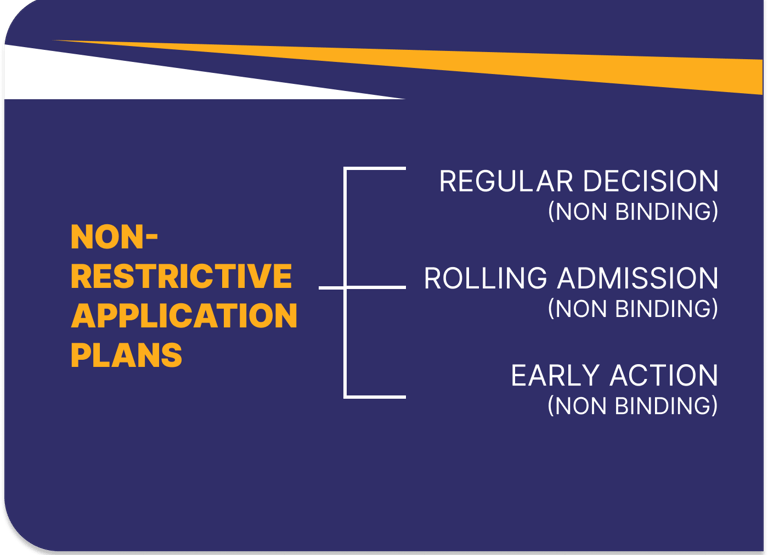
Non-restrictive options give you the freedom to apply to multiple schools and take your time deciding where to enroll, usually until May 1 of your senior year.
There are three options available under this plan:
Early Action
Regular Decision
Rolling Admission
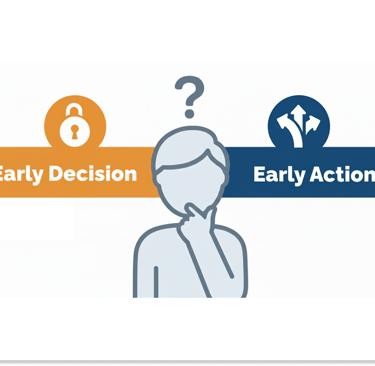
With Early Action, you submit your application by the early deadline (usually October 15 or November 1st), and the college provides you with its decision earlier (usually between December 15 and February 15). You have no commitment to attend; you will receive the answer by the college's first decision deadline.
Regular Decision means that you turn in your application by the college’s deadline, usually by January 1st, and they let you know by April 1st, usually no later than April 1st.
For Rolling Admission, colleges review applications as they are submitted and make decisions throughout the admission cycle (usually within four to six weeks of submission of the application). With colleges offering this option, it is wise to send your application as soon as possible, as some will fill their classes by early winter, and when the classes are filled, your chances of gaining admission will drastically worsen.
RESTRICTIVE ADMISSIONS PLAN
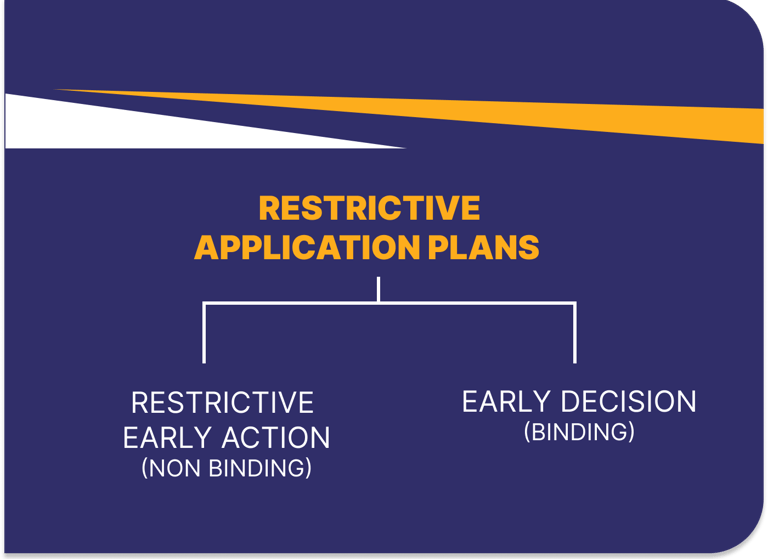
There are three types of restrictive application plans:
Early Decision
Early Decision 2
Restrictive Early Action
When you decide to apply Early Decision, you apply early (usually by November 1st) and commit to attending that college if admitted. Early Decision is for students who have already identified a clear first-choice college. Early Decision is a contract between you and the college. You agree that if the college accepts you, you will withdraw all other college applications and attend the early decision college. Because of this commitment, you can apply Early Decision to only one college.
Early Decision 2 is very similar to Early Decision, but the deadlines differ. You are making the commitment to attend one college when applying, usually by January 1. Colleges respond between February 15 and April 1. Few colleges offer this modality.
Restrictive Early Action. This admissions plan means that you apply to your college of choice and get a decision early. However, applicants are restricted from applying to many other early plans at different schools. You are only allowed to apply to public colleges and universities. You are not allowed to apply Early Action, for example, to private colleges and universities, unless a scholarship is involved. If you proceed this way, you’ll have until May 1 to confirm your attendance.

SELECTING AN ADMISSIONS PLAN
Selecting the right admissions plan depends on your personal goals, preparedness, and how certain you are about your top-choice colleges.
If you are ready early and have a clear first-choice school, Early Action or Early Decision (if restrictive options are allowed) is usually the most favorable option for boosting admissions opportunities.
If you need more time to strengthen your application or compare financial aid offers, Regular Decision provides that flexibility.
Rolling Admission is ideal if you prefer an earlier decision without a fixed deadline, but applying sooner increases your chances.
Consider factors such as application deadlines, decision timelines, and your overall college strategy when selecting the best plan for you.