

TYPES OF COLLEGE FAIRS
Not all college fairs are structured the same way.
Large national fairs, such as those hosted by the NACAC are designed to bring together hundreds of institutions in one venue. Broad exposure is provided, and a wide range of colleges can be explored efficiently, though conversations are often brief.
In contrast, private school-organized fairs are typically curated and smaller in scale. Institutions that align well with the school’s student profile are invited, and more personalized, in-depth conversations are often made possible.
In essence, breadth is offered at national fairs, while depth of engagement is facilitated at school-hosted events.
A college fair isn’t just an information session, it is an opportunity to gain important insights and make a meaningful first impression.
All About College Fairs!



NACAC COLLEGE FAIRS
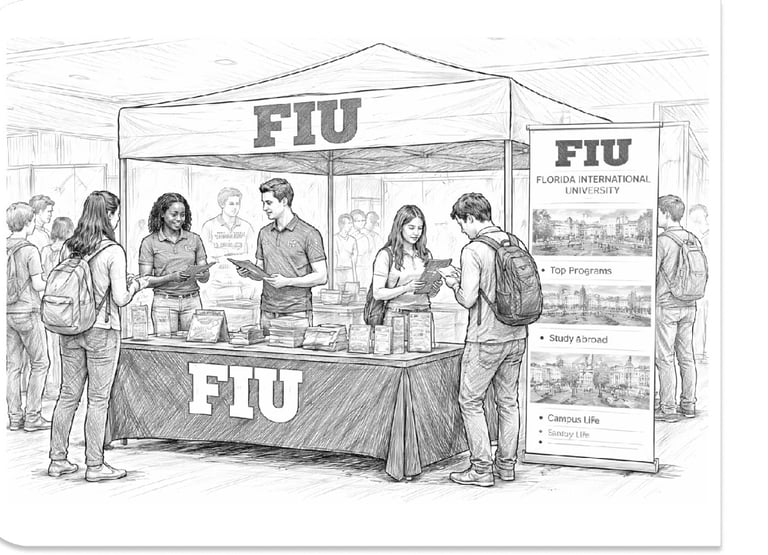
College fairs organized by the National Association for College Admission Counseling (NACAC) are typically held in the fall and spring across major cities in the US. These large-scale events bring together hundreds of accredited colleges and universities in one venue, allowing students to explore a wide range of options efficiently. Attendance is free, but advance registration is usually required through NACAC’s official website, where students can search for upcoming fair dates by location and receive a barcode for streamlined check-in on the day of the event.
CLICK HERE to review the list of attending institutions in advance, and create a short target list to maximize time and conversations on the day of the fair.
COLLEGE FAIR - DO's & DON'Ts
Below is a practical guide to help you navigate your next college fair with confidence discussing what to do, what to avoid, and how to make every interaction count.
✅ Dos
Do research colleges in advance. Choose which colleges interest you the most from the ones attending and create a visit plan to optimize your time at the fair.
Review each school’s majors, size, location, and admissions priorities so conversations feel purposeful rather than generic.
Do prepare a short introduction.
Practice a 15–20 second summary that includes your name, high school, grade level, academic interests, and one specific area of curiosity.
Do ask thoughtful, specific questions.
Ask about programs, research opportunities, advising models, internships, or campus culture rather than facts listed on the website.
Do bring a notebook or phone notes. Write down names, advice, and follow-up steps immediately after each conversation. Do collect contact information. Ask for a business card or confirm the best way to follow up after the fair.
Do dress neatly and appropriately. Business-casual attire signals seriousness and respect, even though formal clothing is not required.
Allow the representative to finish speaking, maintain eye contact, and respond thoughtfully.
Do follow up after the fair by sending a brief thank-you email referencing a specific part of the conversation to reinforce interest.
🚫 Don’ts
Don’t ask questions easily answered online.
Avoid questions about application deadlines, acceptance rates, or basic requirements unless clarification is needed.
Don’t dominate the conversation.
Keep responses concise so the representative can engage meaningfully and help other students as well.
Don’t criticize other schools or your current school. Professionalism matters, and negativity reflects poorly on judgment.
Don’t bring parents into the initial conversation.
Don’t collect materials without engagement. Flyers matter far less than genuine interaction and name recognition.


MAKING MEANINGFUL INTERACTIONS AT COLLEGE FAIRS
Making a strong impression at a college fair is about quality, not quantity. Rather than rushing from table to table, focus on having thoughtful conversations that demonstrate genuine curiosity and preparation. Prepare a brief 15–20 second introduction including your name, school, grade, and academic interests, and tailor your questions to each institution. Listen actively, take notes, and follow up after the fair — admissions representatives remember students who engage thoughtfully and show clear interest. Meaningful interactions can turn a short conversation into a lasting connection that may support your application later.
Sample Questions:
What opportunities exist for first-year students to get involved in research or hands-on projects in [your field of interest]?
How would you describe the advising and mentorship structure for students in my intended major?
What makes students successful here beyond strong grades and test scores?
Can you share an example of a unique program, project, or experience that students often discover after enrolling?
How does the campus support collaboration and community among students in my area of interest?
How flexible is the curriculum if a student wants to combine two interests or design their own interdisciplinary path
What kind of class sizes should students expect in the first and second year?
How accessible are professors outside the classroom for mentoring or research opportunities?
Are there opportunities for students to collaborate with faculty on published research or conferences?
Are there opportunities for students to work on real-world projects with companies or organisations?
How does the university help students develop leadership and communication skills?
What resources are available for students interested in entrepreneurship or launching their own ventures?